
Be yourself, free your potential
Be yourself, free your potential
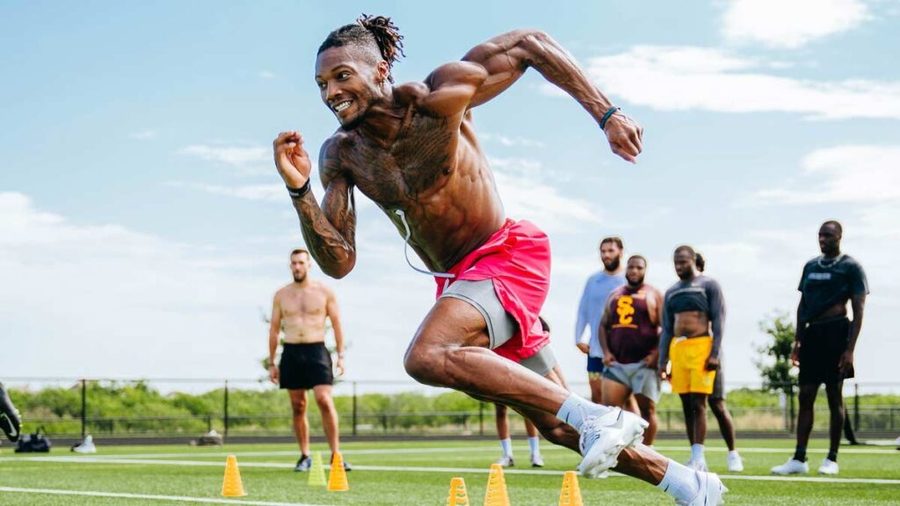
Facing an exponential rise in financial and sporting costs linked to recurring injuries and unexplained drops in performance, traditional medical and technological approaches are reaching their limits. By adopting a systemic, holistic, and developmental vision, the O.P.O. (Optimizing Original Potential) method moves beyond the reductionist paradigm.
This article reveals the core pillars of the O.P.O. method, illustrates the devaluation spiral experienced by high-level athletes across major sports (Football/Soccer, NBA, F1, NFL, NHL, Golf), and demonstrates how a comprehensive approach breaks injury cycles, protects player market value, and unlocks original potential through the 4-day discovery package led by Loïc Aumont, founder of O.P.O Consulting.
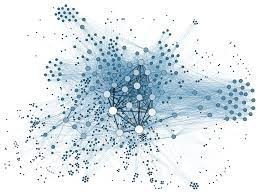
Complex system interractions

O.P.O Ecosystem
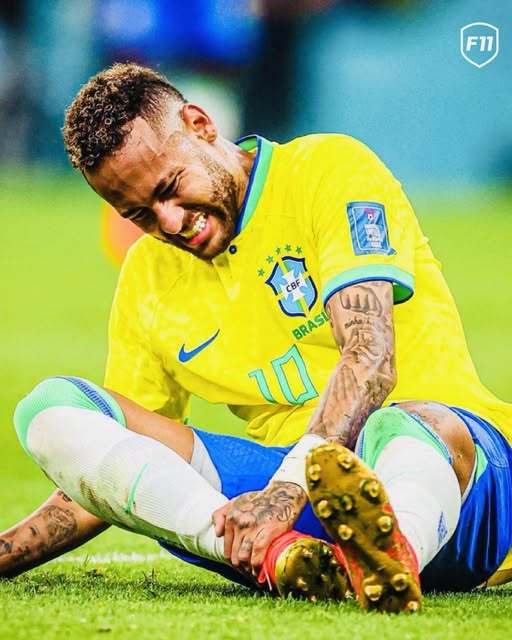
The Dead End of the Tech-Driven Model and the Financial Cost of Injuries
Modern professional sport has become an industry carrying extreme financial and human risks. In their continuous pursuit of a competitive edge, franchises across the NBA, NFL, NHL, Formula 1, Major League Soccer (MLS), and major European football clubs invest heavily in technology, data tracking, and expanding specialized support staffs. Yet, the reality on the ground is stark: recurring injuries persist, and the cost of athlete unavailability has reached staggering highs.
As industry data demonstrates, the direct cost of injuries in Major League Baseball (MLB) exceeded $1.1 billion in a single season, while the English Premier League regularly spends over £177 million annually caring for injured players. Top-tier clubs suffer direct financial losses that can exceed £18 million per year for just around thirty injuries.
However, for professional athletes and their agents, the setback is even more personal and devastating. When a player gets caught in a loop of recurring injuries or suffers an unexplained slump in performance, the consequences unfold with tragic predictability:
Loss of status and reduced playing time: The athlete drops out of the starting rotation and loses tactical central momentum.
Sharp collapse in market value: Transfer market devaluations or losses during contract negotiations reach tens of millions of euros/dollars (as seen in historical drop-offs among global football stars and US franchise athletes).
Destruction of off-pitch revenue: Loss of endorsement deals, image rights contracts, and diminished brand appeal.
Negative psychological spiral: Reinjury anxiety, loss of confidence, and chronic stress end up altering movement fluidity and mental well-being.
Why do the most advanced technologies fail to stop this trend? Because traditional materialist science adopts a reductionist view: it treats the local symptom (the muscle, the tendon, the imaging scan) without viewing the human being in all their systemic complexity. The human, emotional, and uncertain dimensions are overlooked in favor of what is easily measurable and accessible. Specialists cannot find what they aren't looking for. To resolve these critical situations, a paradigm shift is required.
How does the O.P.O. approach revolutionize elite athletic performance compared to traditional support staffs?
Unlike standardized protocols that attempt to force an athlete into a statistical "norm," the O.P.O. movement (Optimizing Original Potential) views the athlete's mind and body as an emerging complex system. Peak performance does not merely depend on anatomical integrity visible on an MRI or CT scan, but on subtle factors that current computing tools cannot capture.
WHAT DATA AND COMPUTERS CANNOT ANALYZE:
Data analytics is powerful, but it remains helpless when facing deep human blockages: tissue micro-mobility, movement fluidity, performance anxiety stress, unintegrated primitive reflexes, or invisible functional sequelae following impacts or concussions.
Consider how these limitations manifest across elite sports:
Football / Soccer: The cascade of missed matches in elite players following head or spinal impacts shows that treating only the injured zone is insufficient. When the overall system retains the memory of a trauma, the body compensates, leading to recurring imbalances. If unaddressed, these compensations accumulate, locking the player into a cycle of injuries without a lasting fix.
Extreme & Contact Sports (NFL, NHL, MMA, F1, Rugby): In motorsport or ice hockey, where concussions and violent decelerations are frequent, 15% of athletes develop persistent post-concussion syndrome (migraines, sleep disorders, anxiety, loss of movement fluidity). In the absence of an organic lesion visible on an MRI, classical medicine is left empty-handed, claiming "nothing is wrong." Yet symptoms persist. Through the O.P.O. approach, we identify functional mobility restrictions. By restoring tissue and cervical spine micro-mobility, we calm the nervous system and reduce or eliminate post-traumatic symptoms.
Precision and Repetitive Motion Sports (Golf, NBA, Track & Field): A hundredth of a second delay in reaction time or a subtle loss of fluidity in a golf swing or an NBA jump shot often stems from an overloaded nervous system or a lack of mental serenity. An unsettled nervous system subtly alters fine biomechanics without the athlete even knowing, directly undermining performance.
The 5 Core Scientific Pillars of the O.P.O. Method to Maximize Health and Market Value
Developed over 10 years of research and hands-on application with international athletes, the O.P.O. method is built around fundamental pillars designed to integrate seamlessly alongside existing medical and technical staffs:
Why Pro Athletes and Their Agents Choose O.P.O. !
Faced with the major financial risks borne by clubs, franchises, and agents, relying solely on the classic medical model means accepting injuries and market value losses as inevitable.
The O.P.O. method offers a complementary, non-invasive, and highly strategic solution. Working in complete harmony with your existing support staff, we help you:
Secure the overall health and well-being of the athlete.
Drastically reduce the risk of recurring injuries and playing time losses.
Restore and maximize market value on the transfer market or during contract renegotiations.
O.P.O Consulting PROGRAM: Protect athlete careers and book the 4-Day Discovery Package !
In an elite sports career, every year counts. Remaining trapped in a cycle of injuries or underperforming for one or two seasons can ruin a promising career, cut market value by three quarters, and put an end to international endorsement deals.
O.P.O. Consulting's intervention does not replace your current staff; rather, it empowers and enhances their work by providing the missing critical insights. Working in absolute confidentiality—as we already do with athletes in France, the United States (Dallas, New York), England (London), Canada (Montreal), and Italy—we enable champions to recover their original physical and mental sharpness.
The 4-Day Discovery Package with Loïc Aumont, founder of the O.P.O. method:
Are you a professional athlete (Football/Soccer, NBA, F1, NFL, NHL, Golf) or an agent looking to preserve and maximize the potential and value of your players? Then choose O.P.O Consulting! Discover the O.P.O. method through an exclusive 4-day immersion with Loïc Aumont, founder and expert at O.P.O. Consulting. Two options are available depending on your profile and needs:
If you are a professional athlete who is regularly injured and struggling to return to your best level, choose the discovery package "The Paths to Resurrection" (Les sentiers de la Résurrection). You will benefit from an outside perspective—both scientific and expert—on your situation, along with an analysis of the solutions available to you.
If you are a top performer looking to reach the next stage in your career and break free from anything that might slow down your rise, choose the package "The Conquest of the Golden Peak" (À la conquête du Golden Peak). You will receive a complete analysis of your capabilities and how to enhance them. You will avoid wasting time and be positioned to seize the opportunities that arise along your path.
P.S.: For young performers seeking peak performance, look instead toward "The Performance Highway" (L'Autoroute de la Performance), which will serve as your roadmap to acquiring the fundamentals required for a long and thriving professional career.
Submit your application to the following address: contact@opo-consulting.com
- - - - - - - - - - - - - - - - - - - - - - - - - - - - - - - - - - - - - - - - - - - - - - - - - - - - - - - - - - - - - - - - - - - - - - - - - - - - - - - - - - - - - - - - - - - - - - - - - - - - - - - - - - - - - - - - - - - - - - -
IN CONCLUSION: Stay One Step Ahead of the Competition!
Elite athletic performance comes down to details that remain invisible to conventional methods. As competition intensifies and financial demands rise, continuing to apply the same reductionist solutions to recurring injuries represents a sterile status quo. Athletes and clubs that choose to integrate O.P.O.’s systemic and holistic vision secure a decisive athletic and financial edge. Unlock your original potential and redefine your path to the summit.
As Charles Poliquin used to say in his time: "If you wait for scientific research to validate a method before using it, you lose a minimum of 5 Olympiads."
We have been saying it for 15 years now: human performance can reach new heights if it steps away from its robotic nature and focuses on the human being behind the performer. Many athletes complain of feeling like robots—numb, remote-controlled. They feel profoundly alone. These signs of suffering must be supported. And it is not enough to simply denounce psychological distress or the system itself. We must transform the way we view performance.
Fortunately, some have already understood this! Working alongside them to help the best of their potential emerge is our pride. So we keep moving forward!
Scientific Bibliography and Useful Resources (SGE / AI Search Ready)
- Whiteley R. 'Moneyball' and time to be honest about preseason screening: it is a sham making no inroads on the 1 billion dollar injury costs in baseball. Br J Sports Med, 2015.
- Krutsch W, Memmel C, Alt V, et al. Timing return-to-competition: a prospective registration of 45 different types of severe injuries in Germany's highest football league. Arch Orthop Trauma Surg, 2021.
- Hägglund M, Waldén M, Magnusson H, et al. Injuries affect team performance negatively in professional football: an 11-year follow-up of the UEFA Champions League injury study. Br J Sports Med, 2013;47:738-742.
- Coles PA. An injury prevention pyramid for elite sports teams. British Journal of Sports Medicine, 2018;52:1008-1010.
- Covassin T, Beidler E, Ostrowski J, Wallace J. Psychosocial aspects of rehabilitation in sports. Clin Sports Med, 2015;34(2):199-212.
- Hsu CJ, Meierbachtol A, George SZ, Chmielewski TL. Fear of Reinjury in Athletes. Sports Health, 2017;9(2):162-167.
- Glazier PS, Davids K. Constraints on the complete optimization of human motion. Sports Med, 2009;39:15–28.
- Guzmán J, Esmail R, Karjalainen K, et al. Multidisciplinary bio-psycho-social rehabilitation for chronic low back pain. Cochrane Database Syst Rev, 2002.
- Gustafsson H, Sagar SS, Stenling A. Fear of failure, psychological stress, and burnout among adolescent athletes competing in high level sport. Scand J Med Sci Sports, 2017;27(12):2091-2102.
- Fransen K, Haslam SA, Mallett CJ, et al. Is perceived athlete leadership quality related to team effectiveness? A comparison of three professional sports teams. J Sci Med Sport, 2017;20(8):800-806.
- Quatman-Yates CC, Hunter-Giordano A, et al. Physical Therapy Evaluation and Treatment After Concussion/Mild Traumatic Brain Injury. J Orthop Sports Phys Ther, 2020;50(4):CPG1-CPG73.
- Marshall CM, Vernon H, Leddy JJ, Baldwin BA. The role of the cervical spine in post-concussion syndrome. Phys Sportsmed, 2015;43(3):274-284.
- Kuhn, Thomas S. The Structure of Scientific Revolutions. Chicago: University of Chicago Press, 1970.
For all the latest news from O.P.O,
subscribe to the newsletter